The 2020 crop is currently variable with some fields still struggling and lagging behind due to early-season stress (4-6 leaves) while other fields are starting to grow vigorously (9-11 leaves with easily visible squares). Very few fields will see a bloom during the first week of July this year. Rainfall has been variable but many areas have received some over the last week or so. With top-dress fertilizer having been recently applied in many cases, the fields that have received rain are now taking off (assuming they aren’t still trying to recover from early season stress).
Growth stages vary but it is safe to say that the 2020 crop is 2 weeks behind for most folks, and 3 weeks behind for the fields that encountered significant early season stress. Due to this delay in maturity, there will be an incentive to accelerate maturity with PGRs. This is logical, however, there are other considerations to take into account.
Pre-bloom PGR applications are most likely to reduce yield compared to early bloom or mid-bloom applications. Most commonly, this is because applications are made when current conditions vary vigorous growth, but the situation quickly changes are drought ensues. In most areas of NC, it is important to remember that we are never more than 4-5 days away from a significant drought at any given time, regardless of recent rainfall amounts. This is especially the case in our more sandier soils. Pre-bloom PGR applications are also more likely to reduce yield in early planted cotton, as they can limit the formation of potential fruiting sites. Therefore, we generally see the most positive responses to pre-bloom PGR applications to 1. Late-planted cotton, and 2. In years where soil moisture is not limited (i.e., timely rains resulting in little to no plant stress for most of the season). Both of these conditions are currently met for many fields, but the moisture situation could change at any time.
Before making a pre-bloom PGR application, below are some considerations you must take into account: THERE IS NO ONE-SIZE-FITS-ALL APPROACH, nor should all fields be treated as such.
Field History / Soil Type: Field history is often underestimated or not considered when making PGR decisions. Fields that have a history of rank growth, or where soils retain water longer than other fields (but not saturated to the point of plant stress), tend to result in rank growth again. If these fields take a while to dry out enough to allow for sprayer applications, or if they are significant distance from your farm shop, then pre-bloom PGR applications may be warranted, if other criteria are met.
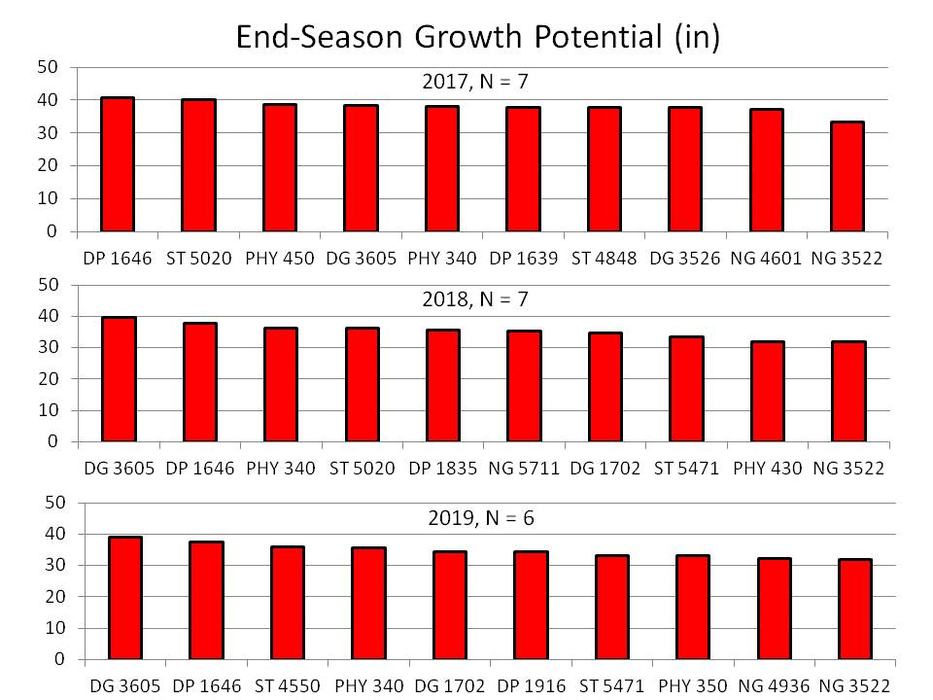
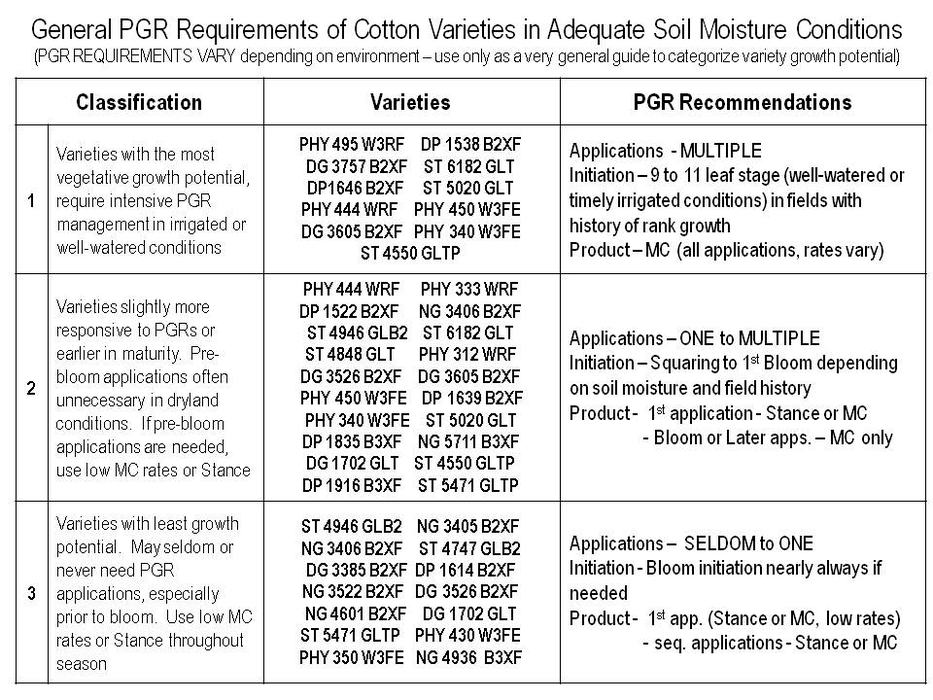
Variety growth characteristics: The prevailing environment drives the need for PGRs far more than genetics, however it is important to know the variety’s genetic tendencies, and target pre-bloom PGR applications to later maturing, more growth varieties, especially when they are planted in fields with a history of rank growth. During the pre-bloom period, some early maturing varieties may be currently growing vigorously, however many of them tend to drastically reduce their rate of growth once blooming begins and a boll load accumulates. Varieties of this nature can generally be managed with a PGR application during bloom fairly easily, and are more likely to negatively respond to pre-bloom PGR applications, especially if dry weather prevails (even a short-lived dry spells). The chart and table below illustrate growth characteristics of some of our newer varieties to help you understand how they compare to known varieties in terms of growth potential. The PGR recommendations table is a very general guide that applies to situations where rainfall is not limited and therefore plants are not stressed.