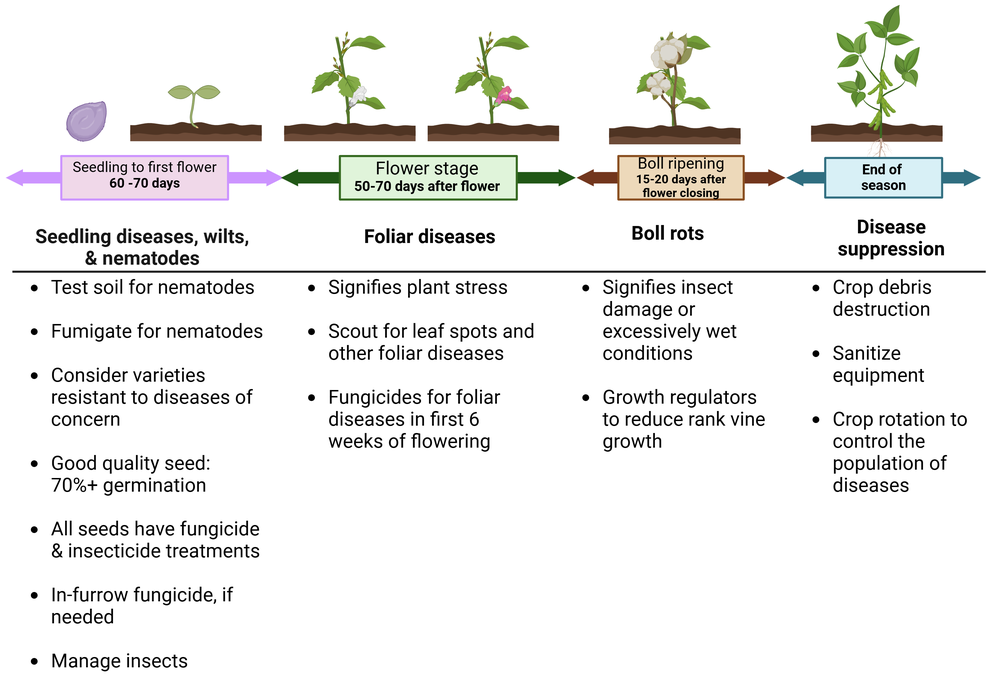
Pests can impact cotton at all stages of growth, requiring careful management based on the field’s disease history and pest pressure. During the seedling stage, nematodes and insect pests can cause significant damage, making soil testing, fumigation, and the use of resistant varieties essential to establishing a healthy crop. Ensuring high-quality seed with fungicide and insecticide treatments, as well as applying in-furrow fungicides when necessary, helps prevent early-season losses from seedling diseases.
As the crop reaches the flowering stage, plant stress becomes evident, and scouting for leaf spots and foliar diseases caused by fungal pathogens is critical. Timely fungicide applications during the first six weeks of flowering can mitigate yield losses from emerging foliar diseases, such as target spot and areolate mildew.
Moving into boll development, insect damage and excessive moisture contribute to boll rot, necessitating growth regulators to reduce excessive vine growth.
Finally, at the end of the season, disease suppression strategies such as crop debris destruction, sanitation of equipment, and crop rotation are crucial in reducing pathogen and pest carryover to the next season. Not all practices need to be implemented for one field. Effective pest and disease management strategies must be adapted based on previous infestations and environmental conditions to optimize cotton health and yield.