After walking a dicamba complaint last summer in Virginia, I could come to only one conclusion. It had to be a temperature inversion. The field in question was about 30 acres in size and sat in a depression surrounded by trees. The grower with injured soybeans was also a tobacco farmer and did not allow dicamba onto the farm. Nothing else sprayed with the same tank or later with the same sprayer displayed dicamba injury. To the west and southwest, up the hill, and across a small river were 125-150 acres of soybeans treated with dicamba. The only source of dicamba around. By process of elimination and given the distance and uniformity of symptomology I concluded it had to be a temperature inversion. But for some reason it was difficult for me to arrive at that conclusion.
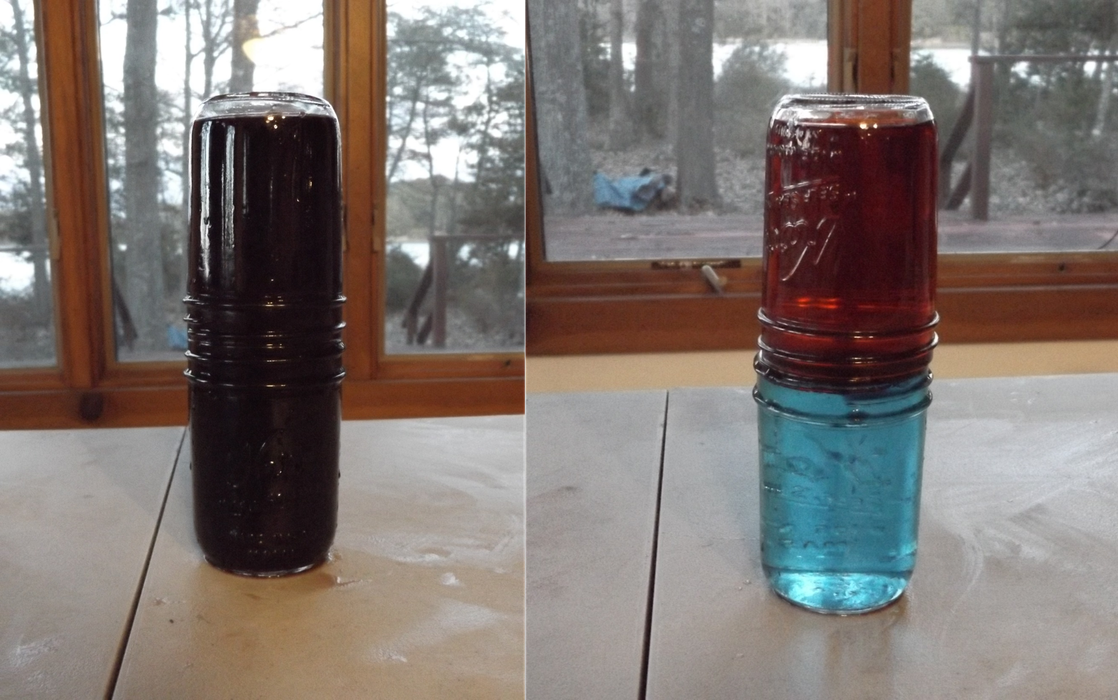
Following this incident, I knew I had to have a way to demonstrate a temperature inversion to growers that would resonate. I had given the “if there is no wind, conditions are conducive to a temperature inversion so don’t spray” spiel countless times, but being a hands-on learner I wanted something tangible to demonstrate a temperature inversion. I found the perfect experiment from a website dedicated to 6th-grade science teachers. Below are my attempts at recreating the experiments. Video credit goes out to my wife Jenny who has a world of patience for my antics.
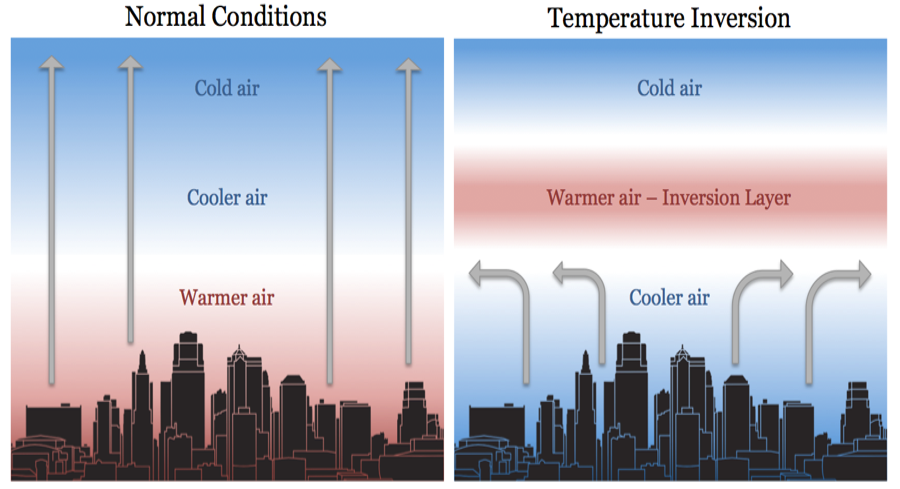
First off let’s start with a refresher. Under normal conditions the sun heats the earth’s surface. Warm air by the surface rises and wind allows for mixing of warm air and the cooler air above it (temperature decreases with increasing altitude). A temperature inversion, as the name suggests, is the exact opposite. This is when temperature increases as altitude increases. This is often the case on clear, windless nights. In this situation, as the sun sets in the evening radiative cooling of the earth’s surface occurs. This coupled with a lack of wind to facilitate mixing cause a warm air layer to be trapped between cooler air near the surface and cold air at higher altitudes. This essentially creates a ceiling where smog, for example, can accumulate. Nocturnal temperature inversions are usually overcome by warming of the earth after sunrise or winds strong enough to cause turbulent mixing.